Rate Uncertainty Set To Cool Sydney And Melbourne Housing Markets In 2026
 April Ossington
12 Jan 2026
April Ossington
12 Jan 2026
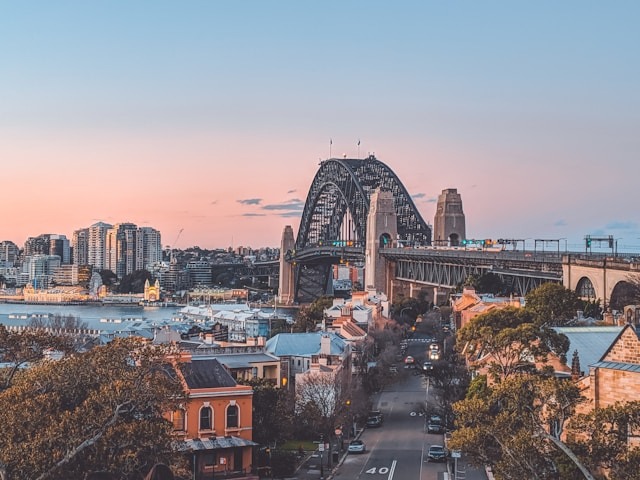
Forecasts from investment bank Barrenjoey suggest home price growth in Australia’s two largest cities is set to lose momentum, with gains expected to ease to just below 2 per cent as buyers respond to the prospect of higher interest rates in 2026.
The outlook marks a sharp slowdown from last year, when national dwelling values rose by an average 8.6 per cent, adding about $71,400 to home prices across the country. Barrenjoey expects growth to cool to 2.8 per cent nationwide in 2026, with Sydney prices predicted to increase by 1.9 per cent and Melbourne by 1.8 per cent.
These projections are well below the pace recorded in 2025, when Sydney values climbed 5.8 per cent and Melbourne prices rose 4.8 per cent, buoyed by three reductions in the official cash rate from the Reserve Bank of Australia. While the major capitals are expected to slow, smaller and mid-sized cities delivered much stronger gains last year. Cotality data shows Darwin led the market with an 18.9 per cent surge, followed by Perth at 15.9 per cent, Brisbane at 14.5 per cent and Adelaide at 8.8 per cent.
Photo by Lisa Anna
Barrenjoey chief economist Jo Masters said the forecast assumes the Reserve Bank will lift interest rates by 25 basis points in both May and August, a view the firm has held since November. A rate increase as early as February is still considered possible, with Barrenjoey assigning it a 40 per cent probability.
Masters said the expected moderation in prices reflects a later stage of the housing cycle, where slightly higher rates begin to restrain demand. However, she noted that medium-sized capitals are likely to continue outperforming as buyers seek relatively more affordable options outside Sydney and Melbourne.
Reserve Bank governor Michele Bullock added to market uncertainty last month by warning that a rate rise remains on the table if inflation proves difficult to contain. She said Sydney and Melbourne could see a period of flat conditions, with the possibility of modest monthly declines, although a sharp downturn is unlikely due to limited housing stock.
Photo by Linda Xu
Cotality research director Tim Lawless echoed that view, arguing that while the absence of further rate cuts will soften demand, a persistent shortage of available homes will continue to support prices. He said national listings finished the year about 20 per cent below the five-year average, with all capital cities recording below-normal stock levels and little relief from new housing supply.
Lawless said these opposing pressures point to slower growth rather than falling prices, with a more balanced market gradually emerging through 2026. He expects Sydney to cool most noticeably due to stretched affordability and sensitivity to interest rates, while Melbourne’s slowdown is likely to be driven by weaker economic confidence rather than price constraints alone.
Domain chief economist Nicola Powell said the housing market is facing two main possibilities, with interest rates either holding steady this year or rising twice, and both outcomes are already dampening buyer confidence.
Powell said uncertainty around the cash rate is influencing how Australians feel about entering the market, particularly when it comes to committing to purchases or sales in 2026. She said the rapid change in expectations for interest rates has unsettled some households and created hesitation around major financial decisions.
Recent data suggests momentum is already easing. National home values rose 0.7 per cent in December, marking the slowest monthly growth in five months. In Sydney and Melbourne, median dwelling prices slipped by 0.1 per cent over the month, according to figures from Cotality.
Population trends are also shaping the outlook. Australia’s population grew by about 420,000 last year, while only 170,000 new homes were completed, according to SQM Research director Louis Christopher. He expects both migration and natural population growth to slow to around 390,000 this year, while the number of completed homes increases.
Christopher said this shift should help narrow the gap between demand and supply, potentially bringing the market close to equilibrium for the first time since 2019. Even so, he expects dwelling values to rise by between 6 per cent and 10 per cent overall.
He said the start of 2026 is likely to be uneven, with Sydney and Melbourne continuing to show inconsistent conditions, while first home buyers remain active through the 5 per cent deposit scheme. Christopher added that a weaker than expected inflation result would significantly lift the chances of an interest rate increase in the first half of 2026.