CES 2026: Bobcat Unveils AI-Driven And Electric Construction Technology
 April Ossington
13 Jan 2026
April Ossington
13 Jan 2026
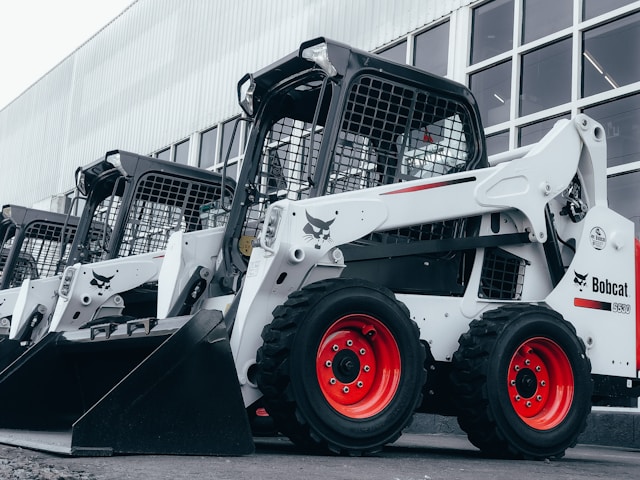
Doosan Bobcat has used CES 2026 to signal a major shift in how compact construction equipment could operate in the years ahead, unveiling a wide range of technologies that blend artificial intelligence, electrification, autonomy and connectivity into a single, scalable ecosystem. The global equipment manufacturer said the new systems are designed to make machines easier to use, safer on site and more productive for operators, technicians and fleet managers.
Chief executive and vice chairman Scott Park said the company’s focus remains on solving practical problems as job sites become more complex and labour pressures intensify. He said the latest developments are intended to help operators work faster and with greater confidence, rather than being distant concepts reserved for the future.
At the centre of the announcement is Bobcat Jobsite Companion, described as the first AI-enabled assistant developed specifically for compact construction equipment. The prototype system allows operators to speak commands or ask questions, with the machine responding through voice prompts and on-screen guidance. It can automatically adjust attachment settings, suggest operational improvements and carry out more than 50 automated functions without requiring the operator to remove their hands from the controls.
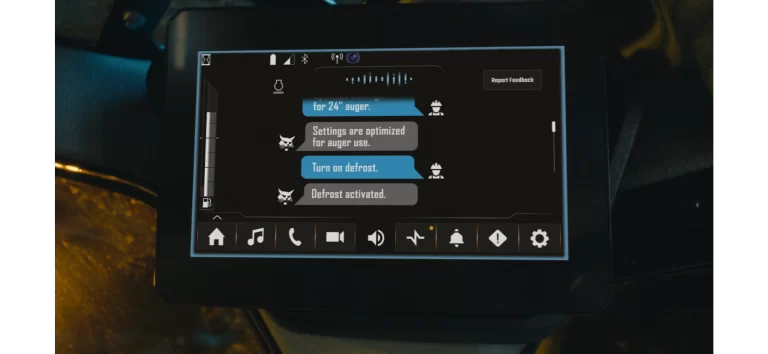
Unlike many AI platforms, Jobsite Companion runs entirely on the machine using Bobcat’s own large language model. This design allows it to operate in real time without relying on cloud connectivity, which is critical for remote or low-signal job sites. Bobcat says the technology represents its biggest change to the operator interface in almost 20 years, lowering the learning curve for new users while helping experienced operators improve precision.
Bobcat also introduced Service.AI, a support platform aimed at reducing downtime by giving dealers and technicians rapid access to diagnostic knowledge. The system allows users to retrieve manuals and warranty information instantly, analyse fault codes and draw on a large database of previous repair cases. By providing step-by-step guidance similar to that of a senior technician, the platform is intended to speed up repairs and ease pressure created by skills shortages across the industry.
Safety was another focus of the CES showcase, with Bobcat presenting a prototype Collision Warning and Avoidance System designed specifically for compact equipment. Using advanced imaging radar, the system continuously monitors nearby objects, tracking their speed and direction. If a collision risk is detected, the machine can alert the operator and automatically slow or stop. Bobcat said early customer trials suggest the system could influence purchasing decisions by improving job site confidence without adding operational complexity.
The company also revealed an Advanced Display Technology concept that replaces traditional screens with a transparent MicroLED display integrated into the cab door or window. The display overlays real-time machine data, 360-degree camera views, collision alerts and asset tracking information directly onto the operator’s field of vision, allowing users to monitor performance while maintaining full awareness of their surroundings.
Pushing further into future-focused design, Bobcat showcased RogueX3, its most advanced concept machine to date. The fully electric and autonomous platform is built around a modular architecture that allows configurations with or without a cab, wheels or tracks and different lift arm designs. While the CES version operates electrically, Bobcat said the platform could ultimately support diesel, hybrid or hydrogen power. Insights from earlier RogueX concepts have already resulted in multiple pending patents.
Supporting this shift towards electrification is the Bobcat Standard Unit Pack, a modular battery system designed to withstand harsh job site conditions. The fast-charging units are stackable, scalable across multiple equipment types and designed to fit within the tight spaces of compact machines. Bobcat said the battery packs could also be supplied to other manufacturers, positioning them as a foundation for the broader electric equipment market.
While all of the technologies shown at CES remain prototypes or concept models, Bobcat said several are progressing towards commercial readiness. Together, the systems illustrate how AI-driven assistance, autonomous safety features and electric power could combine to reshape everyday construction work, setting a new benchmark for the compact equipment sector.